Only Yesterday
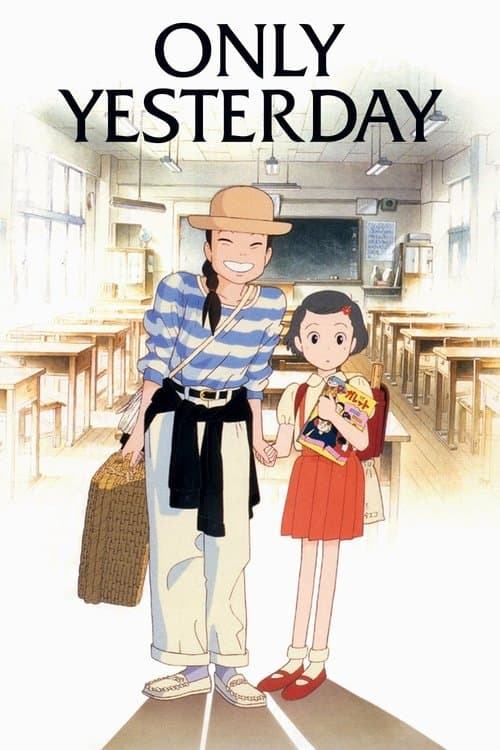
Isao Takahata’s reflective drama follows Taeko, a twenty-seven-year-old woman from Tokyo who travels to the countryside and finds herself revisiting memories of her fifth-grade self with unexpected clarity. As past and present begin to intermingle, the film turns small childhood moments—classroom embarrassments, family tensions, early longings—into pieces of a larger emotional portrait about the person she has become and the life she still wants. Takahata’s understated direction gives the film a rare intimacy, allowing memory to feel fluid, imperfect, and quietly revealing rather than nostalgic in a simple way. With its emotional precision and mature perspective, Only Yesterday becomes a story about memory, adulthood, and the difficult, beautiful process of recognizing who you have been in order to understand who you are.
Why it matters
- Only Yesterday stands as one of Isao Takahata’s most distinctive achievements, proving that animation could explore adult memory, regret, and self-examination with the same richness as live-action drama.
- Its fluid movement between childhood recollection and present-day reflection gives the film an unusually intimate structure, treating memory not as nostalgia but as an active force shaping identity and choice.
- Over time, the film has become one of the clearest examples of Studio Ghibli’s emotional range, admired for its realism, psychological insight, and willingness to find profound meaning in ordinary life.
Watch for
- How Takahata moves between Taeko’s adult life and her childhood memories, allowing the past to feel less like flashback than an active, unfinished part of who she still is.
- The subtle emotional weight given to ordinary moments—school embarrassments, family conversations, small disappointments—which gradually accumulate into a much deeper portrait of adulthood and self-understanding.
- The visual distinction between past and present, especially the softness and openness of the remembered scenes, which makes memory feel selective, intimate, and emotionally alive.
- How the film resists obvious dramatic turns, instead revealing its meaning through reflection, hesitation, and the slow realization that the person you were as a child may still be quietly shaping the life you choose.