From Up on Poppy Hill
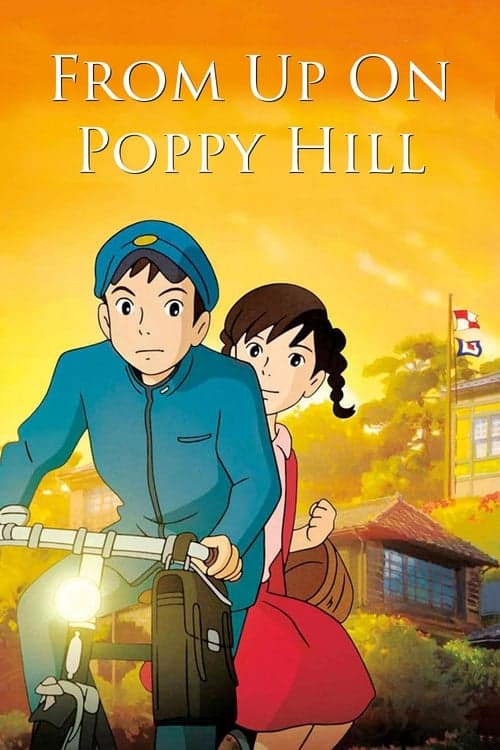
Gorō Miyazaki’s nostalgic drama follows Umi, a responsible high school girl in 1960s Yokohama, whose daily routines of school, home, and quiet remembrance are interrupted when she becomes involved with Shun and a student effort to save an old clubhouse from demolition. As affection grows between them and unexpected truths begin to surface, the film balances youthful romance with a broader portrait of postwar Japan, where memory, renewal, and the future are all in conversation with one another. Its harbor setting, period detail, and measured rhythms give the story a lived-in warmth that makes its emotional turns feel intimate and sincere. With its gentleness and historical texture, From Up on Poppy Hill becomes a story about first love, remembrance, and the desire to protect what still gives a community its soul.
Why it matters
- From Up on Poppy Hill stands out in the Studio Ghibli catalog for turning away from fantasy and focusing instead on memory, youth, and everyday life in a Japan poised between postwar inheritance and rapid modernization.
- Its emphasis on preserving the Latin Quarter gives the film a distinctive emotional and cultural texture, framing the fight to save a cluttered old clubhouse as a defense of history, community, and the value of what younger generations inherit.
- The film has earned lasting affection for its sincerity, period detail, and gentle romanticism, showing how a modest story about school life and first love can also become a meditation on remembrance and renewal.
Watch for
- How the film’s harbor setting, school routines, and domestic rituals create a lived-in sense of postwar everyday life, giving nostalgia a social and historical texture rather than treating it as simple sentiment.
- The energy of the Latin Quarter restoration scenes, where clutter, noise, teamwork, and youthful conviction turn a threatened old building into the emotional heart of the film.
- The gradual shift in Umi and Shun’s relationship, especially the way affection grows through shared purpose, mutual respect, and an increasing awareness of the past’s hold on the present.
- How the story balances lightness and melancholy, using first love and student activism to explore the deeper question of what a generation chooses to preserve before modernization sweeps it away.